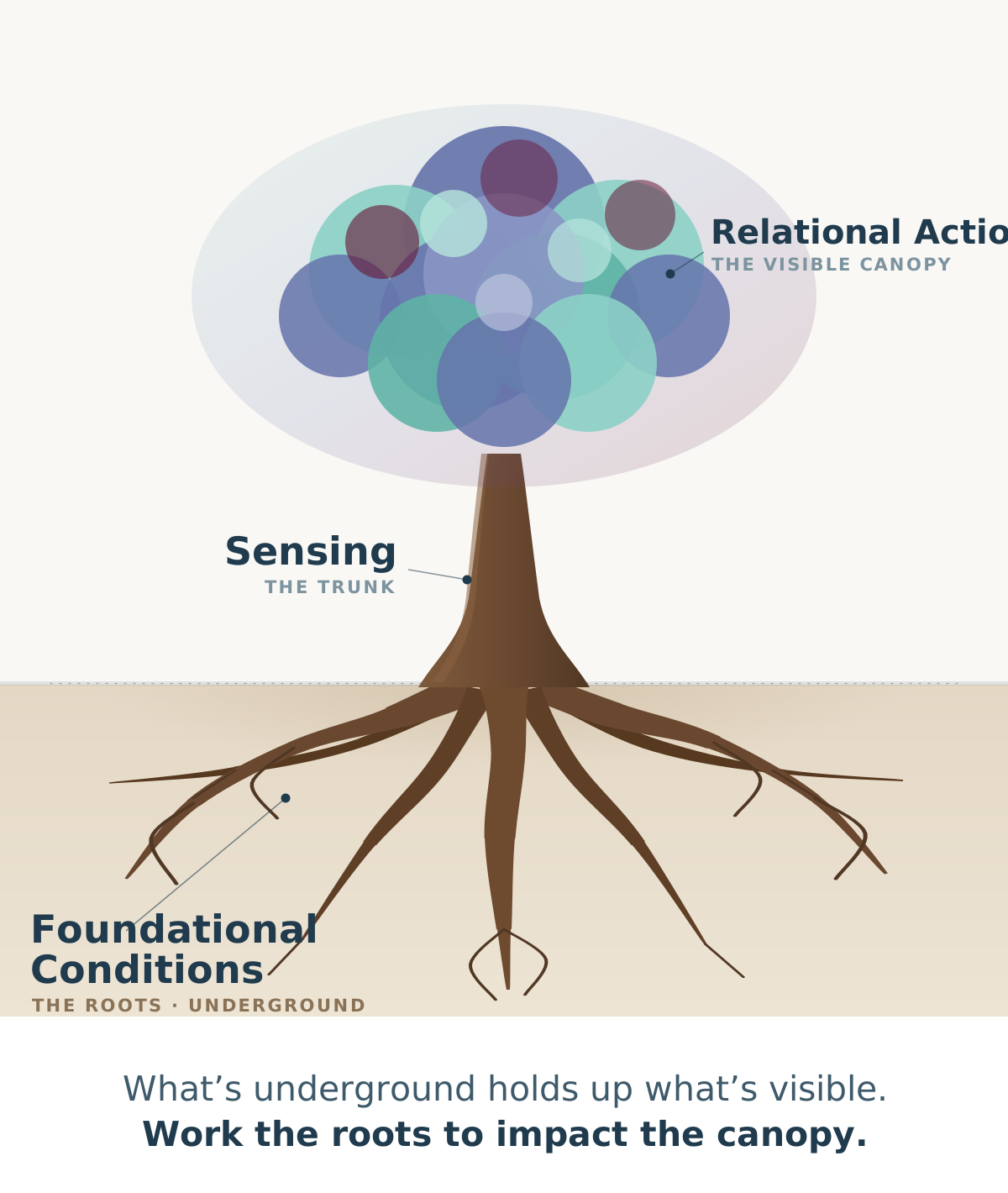
The CRIA Framework
A map of the six dimensions of team culture and relational dynamics that move teams from capable to exceptional, built so you know exactly where to focus first.
The CRIA Framework comes out of nearly two decades of work inside global organizations, helping teams around the world do their best work together.
Take the Free Snapshot →The three tiers in depth

Foundational Conditions
This is the base of the model, and the least visible part of it. Before a team can see clearly or act well, people have to be present and feel safe enough to fully show up. This tier is the most determining of the three and when it is thin, everything above it wobbles.

Sensing
Sensing is the bridge between foundation and action, because a team that feels safe still has to accurately see itself, each other, and the wider system before it can respond to any of them well.

Relational Action
This is the visible tier, where performance actually shows up in the hard conversations, the decisions, and the follow-through. It is also the most dependent of the three, resting on the two tiers beneath it, so gaps here may be symptoms of gaps further upstream.
Where your effort goes furthest
The tiers give you direction: because the dimensions build on each other, they show you where to focus for the greatest return, rather than spreading effort evenly across everything.
The guidance: focus development on the lowest tier where there are gaps.
The three tiers are not a sequence you climb in order but a chain of dependencies, where each tier supports the one above, which means the lowest tier gap is the highest-leverage place to work. You cannot build genuine courageous dialogue when presence and psychological safety are missing, and you cannot act with real intention when a team cannot yet sense itself, each other, and the system it operates in.
This is what the tiers add. Without them, CRIA would be six independent dimensions, and the natural instinct would be to attack whatever scored lowest. However, the tiers tell you what raw scores cannot, which is where your effort will compound.
Read your CRIA profile as an order of operations rather than a list of problems: instead of chasing the lowest score, find the lowest tier with a meaningful gap and start there. You can expect gains upstream to lift the capacities downstream, often without working on them directly. The Framework gives teams a map of where their effort goes furthest, for the biggest impact and the least wasted energy.